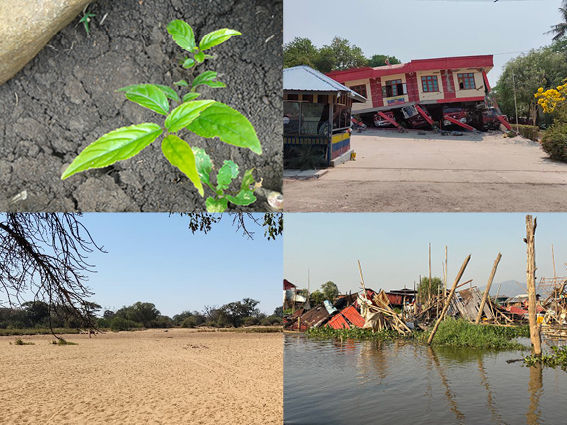
The El Niño Series: Understanding the Super El Niño of 2026
El Niño is making headlines around the world, but what does it actually mean for communities already living with the effects of the climate crisis? In this series, we explore what El Niño is, why it matters, how All We Can's partners are responding, and what it means for people of faith committed to climate justice.
In this first blog of the series, hear from former Chief Executive of the Met Office and former All We Can Trustee, Robert Varley, about the effects we can expect to see from El Niño this year.

Understanding the 'Super El Niño' of 2026
by Robert Varley

Our planet is heating, and we are all experiencing its impacts. Here in the UK in just the last few months we have experienced an exceptionally wet winter with widespread flooding, followed by one of the warmest springs ever recorded. And now much of the country is brown and parched after an extraordinary summer of heat, drought and wildfires.
Around the world it’s the same story. Every year brings more tragic headlines of lives lost, livelihoods destroyed and people displaced due to extreme weather and climate. It’s now well understood that human activity is driving this global heating, disrupting weather patterns and increasing the risk of disasters.
On top of these alarming trends, a so-called ‘super El Niño’ has hit the headlines, threatening even more weather extremes across the world. But what is El Niño, why is this year’s ‘super’ and what can we expect as a consequence?
El Niño is a naturally occurring shift in the winds and currents of the tropical Pacific Ocean. Its effects have been documented in South America for at least 500 years, and there’s environmental evidence for the phenomenon going back tens of thousands of years. The shift in winds and currents occurs roughly every two to seven years, lasting nine to twelve months and typically peaking between November and January. Warmer, less nutrient waters along the Peruvian coast drive away fish, to leave fishing communities hungry as they celebrate the birth of El Niño, (the boy child). Increased rainfall can lead to devastating floods to Western South America, while over on the other side of the Pacific El Niño brings drought and wildfires to Southeast Asia and Eastern Australia.
We now understand that these changes in the Pacific region have much wider consequences, shifting weather patterns around the world. Drought is more likely across Australia, southern and central Africa, in India and parts of South America, including in the Amazon rainforest. Meanwhile rainfall increases across southern United States, parts of the Middle East, and south-central Asia. Major El Niño events have coincided with some of the greatest floods, droughts and forest fires of the past half-century.
This year’s El Niño has been dubbed ‘super’ as the shift in Pacific winds and currents is unusually intense. This means we should expect more severe impacts across the world.
"Understanding how El Niño evolves and how intense this event will be gives us a critical advantage in the face of these extreme risks – time to prepare"
Although El Niño is not caused by climate change, the combination of global heating and El Niño increases the risk of dangerous extremes, and it’s often the poorest communities that are most vulnerable. In Southern Africa, for example, hotter and drier conditions will increase the risk of drought, water shortages and food insecurity. Further north, some areas will face drier conditions with increased risk of drought and wildfire occurrence, while other regions will be wetter with storms and flooding.
Understanding how El Niño evolves and how intense this event will be gives us a critical advantage in the face of these extreme risks – time to prepare. Governments and humanitarian agencies have the opportunity now to anticipate areas at greatest risk, develop effective response plans and allocate the necessary resources before disaster strikes. Doing so will help to protect the most vulnerable, minimise losses and accelerate recovery for those communities affected.
Robert was Vice President of the Royal Meteorological Society from 2021 to 2025, and is a former Chief Executive of the Met Office and Vice President of the World Meteorological Organisation.
The climate crisis means that our partners need to help their communities face new challenges. If you would like to support this area of our work, and would like to see our partners better equipped for working in sustainable disaster resilience, please consider donating to our Emergency Relief Fund.