The El Niño Series: What can we do?
Updated: Aug 27
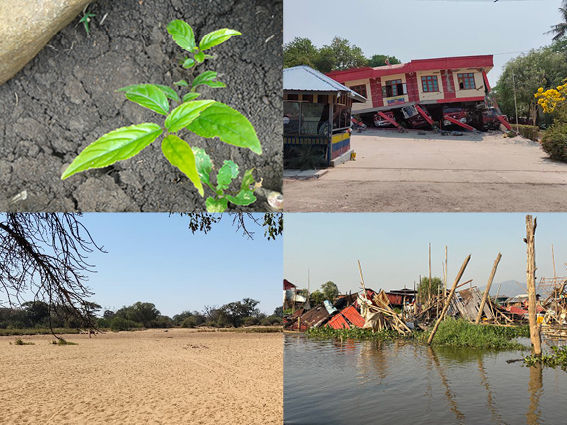
El Niño is making headlines around the world, but what does it actually mean for communities already living with the effects of the climate crisis? In this series, we explore what El Niño is, why it matters, how All We Can's partners are responding, and what it means for people of faith committed to climate justice.
In our latest instalment of blogs, Iona Armiger, Projects Assistant at All We Can, writes a piece on what actions we as individuals can do in the face of galloping climate change and the global injustice that comes with it.
If you've been moved or inspired by this series, please consider making a donation to the Emergency Relief Fund so All We Can can provide extra funding to partners to specifically help with climate preparedness.

What can we do?
by Iona Armiger

As Backson laid out in his El Niño blog, when individuals take action, their consolidated efforts can make a meaningful difference.
This blog explores approaches to local climate action, and how even the smallest change to daily habits can become a movement which makes a vital impact. In order to prevent further enhanced natural hazards such as the ‘Super El Niño’, local action must be taken on a worldwide scale to prompt change and fight back against exacerbated climate change.
So, what can the normal every day person do to make a positive difference? Firstly, it is important to remember that communities are essential; forming Community Action groups ensure that local councils are involved in action plans to address climate change, such as investing in renewable energy schemes, protecting natural habitats and implementing lower speed zones to limit vehicle emissions. Another aspect of community work is encouraging the use of allotments and shared green spaces to grow food, as emissions from both the production and shipping of food to supermarkets has a not insignificant effect on the climate. On an individual note, introducing alternatives to meat and dairy into your diet is a small way to reduce your environmental impact due to the emissions which are produced from agricultural farming, which growing local produce can also help with.
"...even the smallest habit change such as purchasing second-hand clothing, reducing the amount of food waste you produce or consciously recycling wherever possible."
One action which can create widespread positive change is reaching out to your local council and MP about climate change along with exploring what actions they are already taking. If you do not feel they are doing enough, you can use your voice to call for change in your area and encourage others to do the same to provoke change. Another action you can take as an individual is to focus on reusing, reducing and recycling where possible. This might seem like an old scheme, but it is still just as relevant now as it was when it was first introduced; even the smallest habit change such as purchasing second-hand clothing, reducing the amount of food waste you produce or consciously recycling wherever possible.
One way to encourage this behaviour is through finding local independent businesses who provide sustainable food options, slow-fashion or second-hand clothing, or offer mending services for household items. This is also a good way to form communities of like-minded people who have a passion for reducing their impact on the planet and fighting against climate change.
"It is important to remember that it is not just down to us as individuals, but also corporations and countries to take positive action around climate change. So, whilst you make everyday changes, ensure you are also calling for those who produce the most pollution to take responsibility and generate action globally."
Travel is another considerable factor in climate change. The greenhouse gas emissions and air pollution produced by cars has an impact not only on the climate, but also on people who live in built-up areas where traffic is heaviest. One alternative is to make the switch to electric cars which although better for the environment than petrol or diesel, still impacts the climate as most of the energy used to charge these is generated through fossil fuels, and the production process generates emissions. An even greener alternative is using the bus or train to travel – by showing that there is a need for these services it can push the government to supply more funding due to its benefits. For shorter distances, walking or cycling can be a zero-emission alternative that also prevents unnecessary traffic, especially during school or work hours.
It is important to remember that it is not just down to us as individuals, but also corporations and countries to take positive action around climate change. So, whilst you make everyday changes, ensure you are also calling for those who produce the most pollution to take responsibility and generate action globally. Most importantly, remember that although one small act may not change things, many small actions can lead to a worldwide movement.
The climate crisis means that our partners need to help their communities face new challenges. If you would like to support this area of our work, and would like to see our partners better equipped for working in sustainable disaster resilience, please consider donating to our Emergency Relief Fund.